Automation, fueled by advancements in artificial intelligence (AI) and robotics, is rapidly transforming industries across the globe. What was once confined to factory floors and manufacturing plants is now expanding into fields as diverse as healthcare, education, and even the arts. The question of which jobs will survive in the age of automation is not only one of technological advancement but also of social, economic, and political significance. The rise of AI, robotics, and automation presents both challenges and opportunities, fundamentally changing the relationship between humans and machines.
As technology evolves, it’s crucial to explore the implications for the labor market: Which professions will thrive, which will be phased out, and how can workers adapt to this shift? This essay delves into these questions, offering insights into the present and future of work in an increasingly automated world.
 The Rise of Automation: Transforming the Labor Market
Automation is not a new phenomenon. The Industrial Revolution saw the first major wave of technological change, with machines replacing manual labor in industries like textiles and transportation. However, today’s automation is far more advanced, thanks to breakthroughs in artificial intelligence, machine learning, and robotics. Unlike previous generations of technology, which focused primarily on physical tasks, modern automation also targets cognitive work—decision-making, pattern recognition, and problem-solving.
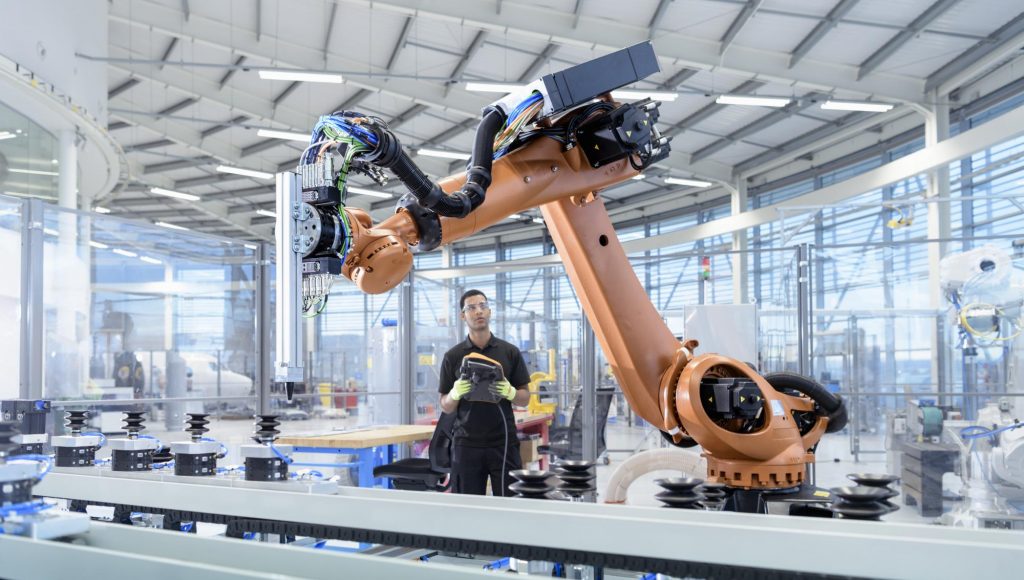
This shift is reshaping industries across the board. In the manufacturing sector, robots have long been replacing humans in repetitive tasks. However, with the integration of AI, these systems are now capable of complex decision-making. For example, AI-powered machines in factories can identify defects in products, adjust production lines, and optimize workflows without human intervention. Similarly, industries like retail and logistics are using automation to streamline operations, reduce costs, and improve efficiency.
While this technological progress brings undeniable benefits, it also raises questions about the future of jobs. In the past, automation primarily displaced low-skill, manual labor. Today, the scope of automation includes tasks that require higher levels of skill and knowledge. Thus, the impact of automation extends beyond factory floors, affecting jobs in fields like customer service, data entry, and even professional services like accounting and law.
Automation in the Workplace: What Jobs Are Most at Risk?
It’s no secret that automation has already started to replace certain jobs. However, as AI and robotics advance, more occupations are at risk of being automated. To understand which professions will survive, we need to look at the types of tasks that can be automated and the skills required for various jobs.
1. Retail and Customer Service Jobs
Retail workers, cashiers, and customer service representatives are among the most vulnerable to automation. The rise of self-checkout systems in supermarkets, automated kiosks in fast food restaurants, and AI-powered customer service bots means that many of the tasks traditionally performed by humans can now be done by machines. The ability of AI to handle basic customer queries and process transactions quickly and efficiently has already led to job losses in certain areas.
For example, Amazon’s cashier-less stores, where customers can walk in, grab items, and leave without waiting in line, represent a significant shift in the retail industry. While such innovations provide convenience to customers and save businesses money, they also eliminate jobs that used to be essential.
2. Transportation and Delivery
The transportation industry is another sector poised for disruption. The development of autonomous vehicles promises to transform the way goods and people are transported. In the not-too-distant future, trucks, taxis, and even delivery drones could be driving themselves, which would drastically reduce the need for human drivers. Companies like Tesla, Waymo, and Uber are already testing autonomous vehicles, and the widespread use of these technologies could reshape the entire transportation industry.
While self-driving technology is still in its infancy, the potential for disruption is enormous. Truck drivers, delivery drivers, and taxi drivers make up a significant portion of the global workforce, and the shift to autonomous vehicles could displace millions of workers.
3. Manufacturing and Manual Labor
Manufacturing has already undergone significant automation over the past few decades. Robotic arms and conveyor belts replaced assembly line workers, and computer systems began to take over tasks like inventory management. Today, AI is capable of taking on even more complex functions, such as quality control, machine maintenance, and process optimization. As AI systems become more sophisticated, the demand for manual labor in manufacturing will continue to shrink.
For example, in the automotive industry, robots are now performing tasks like welding, painting, and assembling parts. These robots can work faster and more accurately than humans, reducing the cost of labor and increasing efficiency. As a result, fewer factory workers are needed, and many jobs in this sector are at risk.
4. Clerical and Administrative Jobs
Administrative positions, including data entry, bookkeeping, and even basic legal and medical tasks, are also being impacted by automation. Software systems can now handle everything from scheduling appointments to processing payroll, reducing the need for human intervention. In law, AI tools are already being used to draft legal documents, conduct research, and analyze case law, tasks that were once performed by paralegals and junior attorneys.
While this may seem like a positive development in terms of efficiency, it also means that many workers in these fields face job displacement. The automation of clerical work is not just limited to low-wage jobs; even white-collar workers are now vulnerable to technological replacement.
Professions That Will Survive: Skills for the Future Workforce
While many jobs will be automated, others will adapt and evolve. The key to surviving in the age of automation is the ability to learn new skills, be adaptable, and engage in tasks that are difficult for machines to replicate. Here are some professions that are likely to endure:
1. Technology and Data Science Jobs
As automation increases, so does the need for skilled professionals who can develop, manage, and maintain these systems. Software developers, data scientists, cybersecurity experts, and AI specialists will be in high demand as businesses invest in automation technologies. Moreover, these professionals will be essential for ensuring that automated systems are functioning properly and securely.
The demand for people who understand AI, machine learning, and robotics will continue to rise. For instance, AI engineers are already responsible for designing algorithms that help machines recognize patterns, make decisions, and perform tasks autonomously. These jobs will only become more crucial as automation expands across industries.
2. Healthcare Professionals
Although some aspects of healthcare, such as diagnostic imaging and data analysis, are being automated, many healthcare jobs still require human interaction, empathy, and complex decision-making. Doctors, nurses, psychologists, and therapists all provide essential services that cannot be replicated by machines. AI can assist in diagnostics and treatment planning, but the human element of healthcare—empathy, communication, and trust—remains irreplaceable.
As populations grow older and healthcare needs increase, there will continue to be a strong demand for healthcare workers who can provide direct care, manage patient relationships, and make critical decisions that machines cannot.
3. Creative Professionals
Despite the growing capabilities of AI in generating text, music, and visual art, the creative industries will likely continue to thrive. Artists, writers, designers, and musicians bring unique insights, creativity, and emotional depth to their work—qualities that are difficult for AI to replicate. While AI can assist in creating content, the creativity and emotional intelligence required for authentic artistic expression will remain a distinctly human trait.
Moreover, as technology advances, new forms of creative expression will emerge. The development of virtual and augmented reality, for example, has already opened new doors for artists and designers. Professionals who can harness these technologies to create immersive, interactive experiences will be in high demand.
4. Teachers and Educators
While technology can aid in the delivery of education, the role of teachers and educators remains vital. AI can assist in personalized learning, grading, and administrative tasks, but it cannot replace the human connection that is so important in the classroom. Teachers inspire, mentor, and guide students, providing not just knowledge but also emotional support and social development.
As education becomes increasingly digital, there will be a greater demand for educators who can integrate technology into their teaching methods and guide students through complex problems. These professionals will also play a key role in preparing the next generation for a world that is increasingly shaped by automation.
Key Takeaways
Automation is transforming the labor market by replacing many repetitive, manual, and cognitive jobs with machines and AI.
Professions most at risk of automation include cashiers, drivers, factory workers, and customer service representatives.
Jobs that require human creativity, emotional intelligence, and complex decision-making, such as those in IT, healthcare, and education, will continue to thrive.
Skilled professionals in fields like AI, data science, and cybersecurity will be essential as businesses adapt to automation.
To succeed in the age of automation, individuals must focus on developing transferable skills, embracing lifelong learning, and adapting to new technologies.
Conclusion
The rise of automation represents a profound shift in the way we work, presenting both challenges and opportunities. While many jobs will be displaced, the demand for skilled workers who can work alongside machines and use technology to enhance productivity will grow. By focusing on education, adaptability, and skills that are difficult for machines to replicate, individuals can remain competitive in the job market. As society moves towards an automated future, it is essential that we embrace change, prepare for new roles, and ensure that the workforce is ready for the opportunities that lie ahead.
