The concept of food deserts has become a central topic in discussions about public health and social inequality. It refers to areas where residents have limited or no access to affordable, nutritious food, especially fresh fruits and vegetables. While food deserts are often discussed in policy and academic circles, their real impact is felt most strongly by communities whose health outcomes are shaped by structural limitations rather than individual choice. Understanding how food deserts function—and why they persist—is essential for anyone concerned with public health, urban development, and social equity.
The Origins and Meaning of Food Deserts
The term food desert emerged in the late twentieth century as researchers began mapping disparities in food access across urban and rural areas. Initially, it described low-income neighborhoods where supermarkets were absent and residents relied heavily on convenience stores or fast-food outlets. Over time, the concept expanded to include rural regions where distance, transportation barriers, and economic decline limited access to healthy food.
Historically, food deserts did not arise by accident. In many cities, they are closely linked to patterns of segregation, redlining, and disinvestment. Supermarkets followed wealthier populations to suburban areas, leaving inner-city neighborhoods underserved. In rural regions, the decline of small farms and local grocery stores further reduced food availability. These trends illustrate that food deserts are not simply about geography but about long-standing economic and political decisions.
Culturally, food deserts challenge the narrative of personal responsibility in health. Public discourse often frames diet-related diseases as the result of poor individual choices. However, when healthy options are scarce, expensive, or inaccessible, choice becomes constrained. In this context, food deserts expose the limits of purely individual explanations for public health outcomes.
How Food Deserts Affect Community Health
The connection between food access and health is supported by extensive research. Communities located in food deserts experience higher rates of obesity, diabetes, cardiovascular disease, and certain nutrient deficiencies. These outcomes are not merely correlated with poverty but are directly influenced by the local food environment.
When fresh produce and whole foods are difficult to obtain, residents often rely on processed foods that are calorie-dense, inexpensive, and shelf-stable. Over time, this dietary pattern contributes to chronic inflammation and metabolic disorders. The cause-and-effect relationship is cumulative: limited access shapes daily habits, which in turn shape long-term health.
Food deserts also affect mental health and stress levels. The constant need to travel long distances for groceries, combined with financial pressure, increases daily stress. For families with limited time or unreliable transportation, food access becomes another source of instability. Children growing up in these environments may face developmental challenges linked to poor nutrition, reinforcing cycles of inequality.
Importantly, the health impact of food deserts extends beyond individuals. Healthcare systems in affected areas face higher burdens, while productivity losses and medical costs affect society as a whole. Nutritional inequality thus becomes a public issue, not just a private one.
Structural Causes Behind Nutritional Inequality
Food deserts persist because they are embedded in broader structural conditions. Market-driven food systems prioritize profit, often avoiding neighborhoods perceived as financially risky. This leaves entire communities dependent on small retailers with limited healthy options and higher prices.
Transportation infrastructure plays a critical role as well. In areas with limited public transit, even a nearby supermarket may be effectively inaccessible. Rural food deserts illustrate this clearly: distance, fuel costs, and time constraints turn basic grocery shopping into a logistical challenge.
Policy decisions also shape food access. Zoning laws, agricultural subsidies, and urban planning influence where food is produced and sold. In many countries, subsidies favor large-scale commodity crops rather than fruits and vegetables, making unhealthy foods cheaper and more abundant. This creates a systemic imbalance that reinforces nutritional inequality.
Social factors compound these issues. Elderly residents, people with disabilities, and low-income families are disproportionately affected. Food deserts thus intersect with other forms of vulnerability, amplifying existing disparities rather than creating isolated problems.
Approaches to Addressing Food Deserts
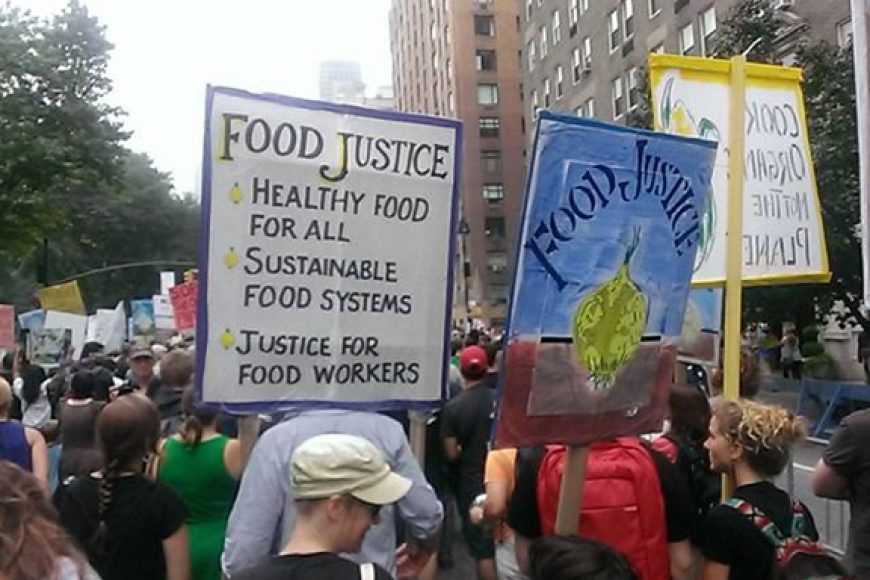
Addressing food deserts requires moving beyond short-term fixes. While food banks and charity-based solutions provide immediate relief, they do not resolve the underlying structural causes. Sustainable solutions focus on improving access, affordability, and agency within communities.
One approach involves incentivizing grocery stores and farmers’ markets to operate in underserved areas. When paired with community engagement, these initiatives can improve both access and trust. Mobile markets and community-supported agriculture programs have shown promise, particularly in areas where permanent infrastructure is difficult to establish.
Urban agriculture and local food initiatives offer another pathway. Community gardens and cooperative food projects not only provide fresh produce but also strengthen social ties and local resilience. While these efforts alone cannot replace large-scale distribution systems, they contribute to a more diversified and inclusive food landscape.
Policy-level interventions are equally important. Expanding public transportation, reforming agricultural subsidies, and integrating nutrition into public health planning can reduce the structural drivers of food deserts. Education also plays a role, but it must be paired with real access; knowledge without availability does little to change outcomes.
Ultimately, successful interventions recognize that food access is a matter of equity rather than convenience. Treating nutrition as a public good shifts responsibility from individuals to systems.
Key Takeaways
Food deserts are areas with limited access to affordable, nutritious food.
They are shaped by historical, economic, and political decisions, not random geography.
Limited food access contributes directly to chronic physical and mental health issues.
Nutritional inequality reflects structural barriers rather than individual failure.
Market forces, transportation, and policy choices all reinforce food deserts.
Long-term solutions require systemic change, not only charitable support.
Conclusion
Food deserts reveal how deeply health is tied to social and economic structures. They challenge the assumption that dietary choices are purely personal and highlight the role of access, infrastructure, and policy in shaping public health outcomes. Addressing nutritional inequality means recognizing food as a foundational component of community well-being. Only by confronting the structural roots of food deserts can societies move toward healthier and more equitable futures.
